

An overlooked consequence of modern, chronically indoor living:
Daytime isn’t nearly bright enough
Nighttime isn’t nearly dark enough
Brightness is just as important as type of light (i.e. sunlight) when it comes to entraining the circadian rhythm, but modern lighting used at all waking hours destroys the light-dark contrast that the body needs for daytime energy and nighttime regeneration.

Daytime Brightness
In nature, sunlight almost always exceeds 10,000 lux of brightness. The eyes and skin perceive that brightness through light-absorbing proteins, most notably “melanopsin.”
Cortisol rises, liberating energy substrates (glucose, fatty acids) into the bloodstream. Dopamine surges, increasing motivation and movement ability. Alertness, digestion, and mitochondrial respiration (cellular energy production) increase.
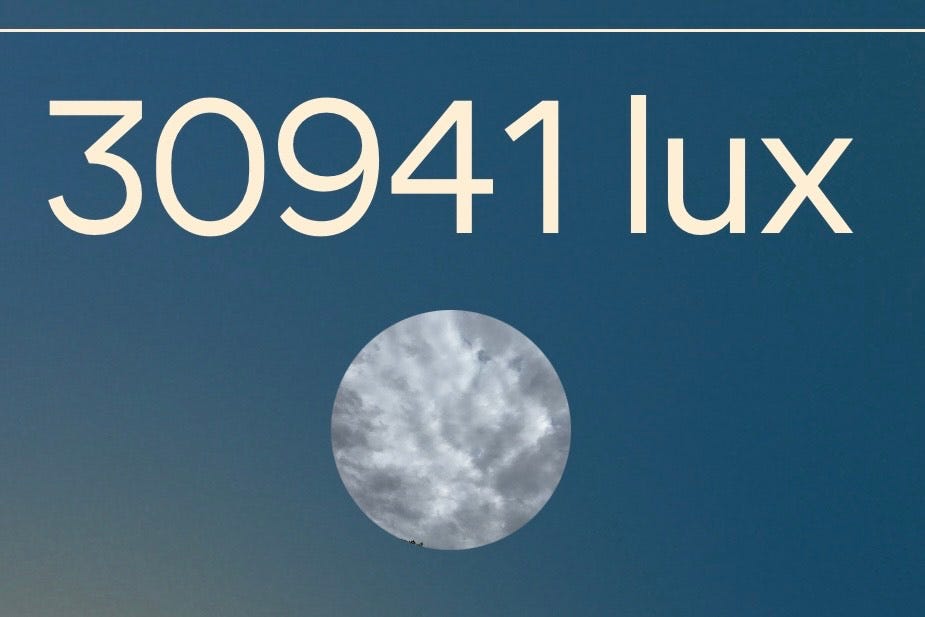
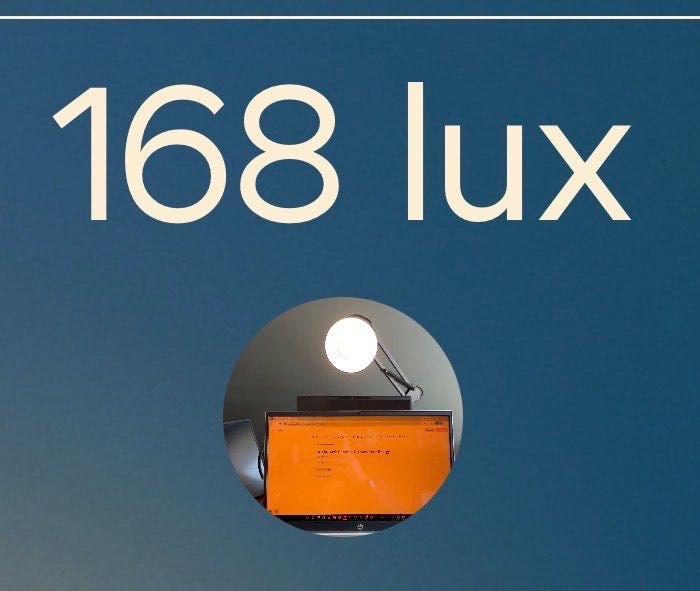
Indoor lighting, though it appears bright, typically measures at anywhere from 50-500 lux. This is nowhere near the brightness levels you’d get from being outside, muting the signal your brain and body require to sufficiently kick into energy production mode.
Nighttime Darkness
Darkness at night is just as important as brightness during the day as it initiates melatonin release, promoting deep sleep and systemic repair.
Your night environment should be ideally less than 5 lux in the 1-2 hours before bed, which is nearly pitch black. At 50-500 lux, typical indoor lighting is far too bright, keeping melanopic signaling elevated.
(P.S nighttime environment should also be void of blue light, but your standard LED bulbs are artificially enriched in blue, further activating melanopsin, suppressing melatonin, and dysregulating the circadian mechanism).
Reestablish Contrast
The problem is most of us are using the same artificial lighting at all waking hours, which muddies the signals that our central and peripheral clocks need to regulate energy production.
The body is stuck in an “in-between state” all day — not stimulated enough during the day and too wired to shut down at night.
The body always seeks out contrast between day and night. In modern times, we reach for coffee during the day and cheap melatonin supplements before bed in an effort to achieve this contrast. But it’s a cheap counterfeit.
Strive for 10k+ lux throughout the day with:
Sunlight breaks as often as possible, or working outside if you have a remote job
A Chroma Sky Portal at your desk if you work indoors
Darken your nighttime space with:
Candlelight
Red incandescent lamps below eye level in corners of your room (further away for less lux)
Red-tinted glasses (the red will tone down brightness in addition to filtering out blue & green light)
Absolutely no overhead or general LED lighting 1-2 hours before bed
Black out small LEDs on TVs, outlets, appliances, etc. in bedroom with electrical tape