

This is no over-exaggeration, and why “no such thing as a healthy tan” is misguided.
Melanin doesn’t just live in your skin. It innervates your nervous system, internal surfaces, and essential organs (especially the high-demand regions — the brain, heart, gut, sex organs, etc.).
It’s a key player in regulating bioenergetics and mitigating toxins in these areas.
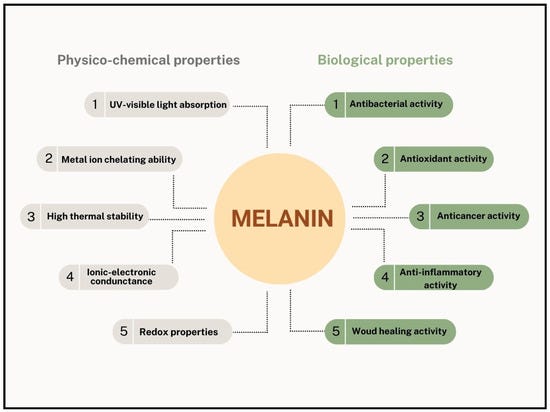
Specifically, melanin is protective against:
Non-native EMF: Melanin is your first line of defense against environmental EMFs, absorbing all wavelengths of energy on the electromagnetic spectrum and transduces it into chemical energy that the body can use. This includes not only sunlight but also microwaves, radio frequencies, even gamma rays. Melanin-rich fungi have even been found in radioactive areas like Chernobyl because they use melanin to transduce EMF into usable energy for accelerated growth.
Heavy metals: Melanin is a powerful chelator of heavy metals, which are accumulated through daily exposure (tap water, vehicle exhaust, glyphosate, etc.).
Gut pathogens: Melanin and its precursor, alpha-MSH, exhibit antimicrobial properties, neutralizing candida, bacteria, and mold mycotoxins. Orifices throughout the GI tract require melanin to remain contracted and tight, squelching overgrowths such as SIBO.
Oxidative stress: Melanin is a potent antioxidant, acting as both donor and acceptor of electrons as needed. It can neutralize oxidative stress by donating electrons to free radicals, which have an unpaired electron. Melanin also uses absorbed light energy to liberate molecular hydrogen from water molecules, reducing highly reactive hydroxyl radicals.
Dopamine loss: Loss of melanin is implicated in neurodegeneration, likely because of its major energetic role in the brain and because of its regulation of dopamine (both melanin and dopamine come from the amino acid L-DOPA). Melanin directly regulates dopaminergic neurons in the brain.
Deuterium build-up: A few interesting mechanisms here. Melanin shows an affinity for deuterated “heavy water” because D2O promotes better electrical conductivity in melanin than H2O. Additionally, the heart chamber separates deuterium isotopes by vortexing blood. Heart tissue contains a lot of melanin, underscoring its importance in maintaining energetic function of the heart.
Histamine/mast cell activation syndrome (MCAS): Melanin interestingly inhibits mast cell degranulation, which is when mast cells release immune mediators such as histamine and cytokines. Intense seasonal allergies often reflect underlying MCAS.
General inflammation: Melanin bolsters the innate immune system, supporting the body with more or less inflammatory signaling as needed.
Other chemical toxins: Melanin “adsorbs” chemical intruders, minimizing cellular damage.


You’re missing out on probably your body’s most powerful defense system by not stacking up melanin.
Build it with:
Sunlight (duh): UV light directly stimulates melanogenesis while infrared stimulates water production (hydrates melanin) and mitochondrial efficiency (lowering melanin degradation). Get tan & watch sunrise/set.
Grounding: The supply of electrons from grounding indirectly supports melanin levels by lowering inflammation and oxidative stress and supporting redox so melanin doesn’t have to step in.
Cold exposure: Cold increases UV biophoton production, stimulating melanin production internally. Cold dopes all semiconductors in the body, including melanin (eskimos are tan for a reason).
Melanogenesis nutrition: Melanin production requires animal protein, vitamin C, iron, copper, zinc & B Vitamins (indirectly for BH4 production).
Support dopamine: Stop doomscrolling, minimize screens, lower addictive/compulsive behaviors like porn, binge eating, etc. High dopamine means less melanin breakdown needed to support dopamine synthesis.
Lower blue light and nnEMF: Artificial blue light in excess destroys the UV-detecting opsins on the skin, which are required to trigger melanogenesis. nnEMF disrupts mitochondrial respiration, causing melanin to degrade as it regulates energetics.