

My next n=1 starts Monday.
I’ll be running high-dose thiamine (vitamin B1) + a high-carb, low-fat diet, evaluating effects on physical performance, body comp, and cognition.
If you’re on health Twitter then you know this isn’t a new concept, but it’s the first-time I’m running TTFD (a superior form of B1) intentionally with high carbohydrate intake (400+g daily).
Why B1?
Vitamin B1 is a critical cofactor for many enzymes involved in energy metabolism. You’re also almost guaranteed to be B1-deficient if you’re not paying attention to it.
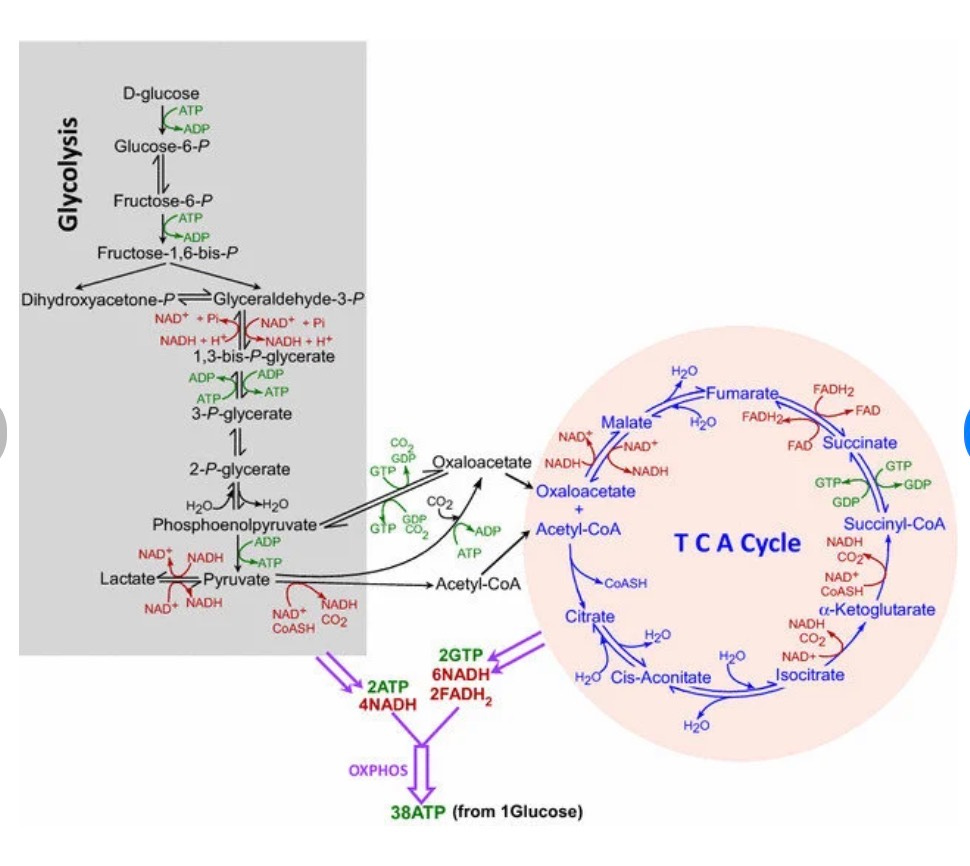
B1 sits at the entry point for glucose to enter the mitochondria.
Glucose is broken down to pyruvate via glycolysis (outside the mito), pyruvate dehydrogenase turns pyruvate to acetyl-CoA, which enters the TCA cycle (within the mito) where protons and electrons get extracted for energy production.
Within the TCA cycle, alpha-ketoglutarate dehydrogenase is also B1-dependent.
If you’re thiamine-deficient, then pyruvate (from glucose) can’t move through the TCA. Your metabolism is stuck in glycolysis, which is very inefficient when it comes to making energy.
See the diagram below: per one molecule of glucose, glycolysis yields 2 ATP while oxidative phosphorylation yields 38 ATP.
There are also various B1-dependent enzymes that sit outside the mitochondria which play a role in substrate metabolism and redox factor synthesis, including transketolase and branched chain ketoacid dehydrogenase.
How does this show up day-to-day? Sluggishness, gut and skin issues, poor athletic output, brain fog, chronic illness…energy production is the driver for all of health.
CO2 Is Your Friend
Another underrated effect of these thiamine-dependent enzymes…they all produce CO2 as a byproduct.
CO2 is what drives oxygen into the cell via the Bohr effect. It also stimulates mitochondrial biogenesis, buffers pH levels within the cell, and increases circulating hemoglobin & EPO concentrations.
If you’re B1 levels are suboptimal, oxygen delivery and utilization is impaired.
Experiment Notes
A high dose of thiamine alleviates the major bottlenecks in glucose metabolism. It makes sense to pair B1 supplementation with high carb intake (60+% of caloric intake).
Fat intake is also going to be capped at 15-20% of daily calories. Fat is metabolized via beta-oxidation, which doesn’t rely on B1. We’re letting glycolysis do its thing while minimizing Randle cycle interference from fat intake. Also taking advantage of CO2 signaling from pyruvate dehydrogenase.
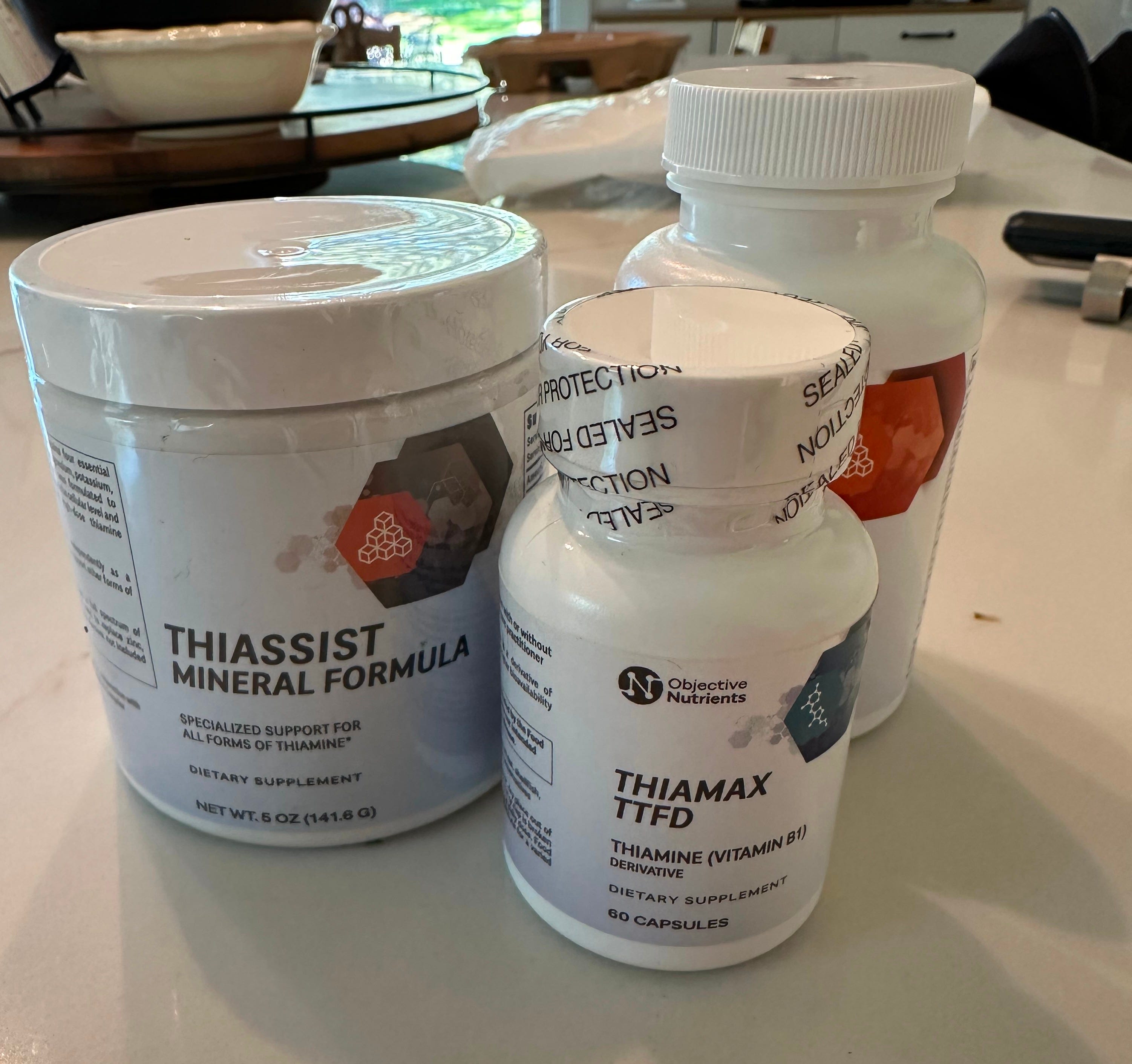
I’m going with the full Thiamax stack from Objective Nutrients. It contains a high dose of TTFD, the superior form of B1, paired with the other B Vitamins as well as electrolytes and minerals, which provide added support for glycolysis, the TCA cycle, and B1 conversion.
Important supplements I’ll be adding on:
Magnesium: required to convert dietary B1 to its active form, thiamine pyrophosphate (TPP). The Thiamax stack includes Mg but I’m topping off my levels with additional oral and topical.
Taurine: increases glucose shuttling and insulin sensitivity via GLUT4 translocation. B1 helps glucose move through the mitochondria, taurine helps it get into the cell in the first place.
Antioxidants: if your engine’s running harder, it’s also putting off more exhaust in the form of reactive oxygen species (free radicals). Choose 1 or 2 antioxidants to support the increased ROS levels — Vitamin E, black seed oil, Vitamin C, etc.
In terms of lifestyle, sunlight and grounding are very important. UV and grounding drive blood flow while IR increases the electron transport chain. Powerful antioxidants in the form of melanin and melatonin rely on UV and IR light as well.
With increased energy output, activity levels should remain high. Daily low-level activity paired with 4-5 days of high-intensity training per week. Mental activity is also important — daily learning or reading is good here.
Coffee and tea consumption should be kept separate from B1 intake as well, because the tannin content interferes with absorption.
Setup
Daily macros (~ 2,500 cal):
Carbs: 400+g
Protein: ~120g
Fat: ~40g
Thiamine stack:
100 mg Thiamine Tetrahydrofurfuryl Disulfide
ThiActive Methylated Vitamin-B Complex
ThiAssist Mineral Formula
Other daily supplements:
Topical Mg Chloride
400-800 mg Mg Glycinate
1-3 g Taurine, with meals
268 mg Vitamin E
1 tsp Black Seed Oil
Lifestyle factors:
Maxing out on daily sunlight and grounding
Keeping daily activity high with step count, Zone 2, and high-intensity strength + cardio
Increasing daily reading to push cognitive energy demand