

After 30 days of skipping dinner in Jan/Feb, I’ll probably do it every winter for the rest of my life.
It’s an elite short-term strategy for the average joe to improve metabolic signaling — think fat loss, muscle gain, energy production, cell turnover, etc.
Definitely ran into some mistakes that will be modified in the future, but now that it’s April and I’ve maintained weight around 185 with a relatively lean physique, I can tell my metabolism didn’t get wrecked but most likely actually improved from the meal restriction.
Check out my post from January if you want to understand the mechanisms in more detail.
I love the idea of skipping dinner for three reasons:
Pre-commitment: For the average person, afternoon and evening time is a nutrition DANGER ZONE — mindless snacking, binging at dinner due to poor caloric intake earlier in the day, eating too late which interferes with digestion and sleep, late-night desserts and/or nightcaps, etc. Saying no to that entire window makes things easier.
Practicality: A few friends/family have taken interest in the protocol because they’re so busy in the evenings. Rather than scarfing down a 9pm dinner then trying to get to sleep, it’s much more realistic to skip it altogether in favor of a bigger breakfast and lunch.
Mortification: The culture HATES discomfort, but suffering is redemptive. Jesus tells us to pick up our cross and follow Him. Paul tells us to deny the flesh and live by the Spirit. Not just to glorify God but to experience fullness of life. Skipping dinner is hard, and it’s a small way to step into suffering, offer it up for grace, and prepare yourself to endure much greater adversity that comes later.
Skipping dinner is especially impactful to run in the winter due to:
Shortened light cycles & food scarcity: In nature, there’s less sunlight and food availability in the winter. Metabolism naturally moves into repair and maintenance with less energy to harness from the environment. Skipping dinner here provides a coherent winter-time signal.
Most likely coming off of excessive processed food intake, drinking, etc. from during the holidays
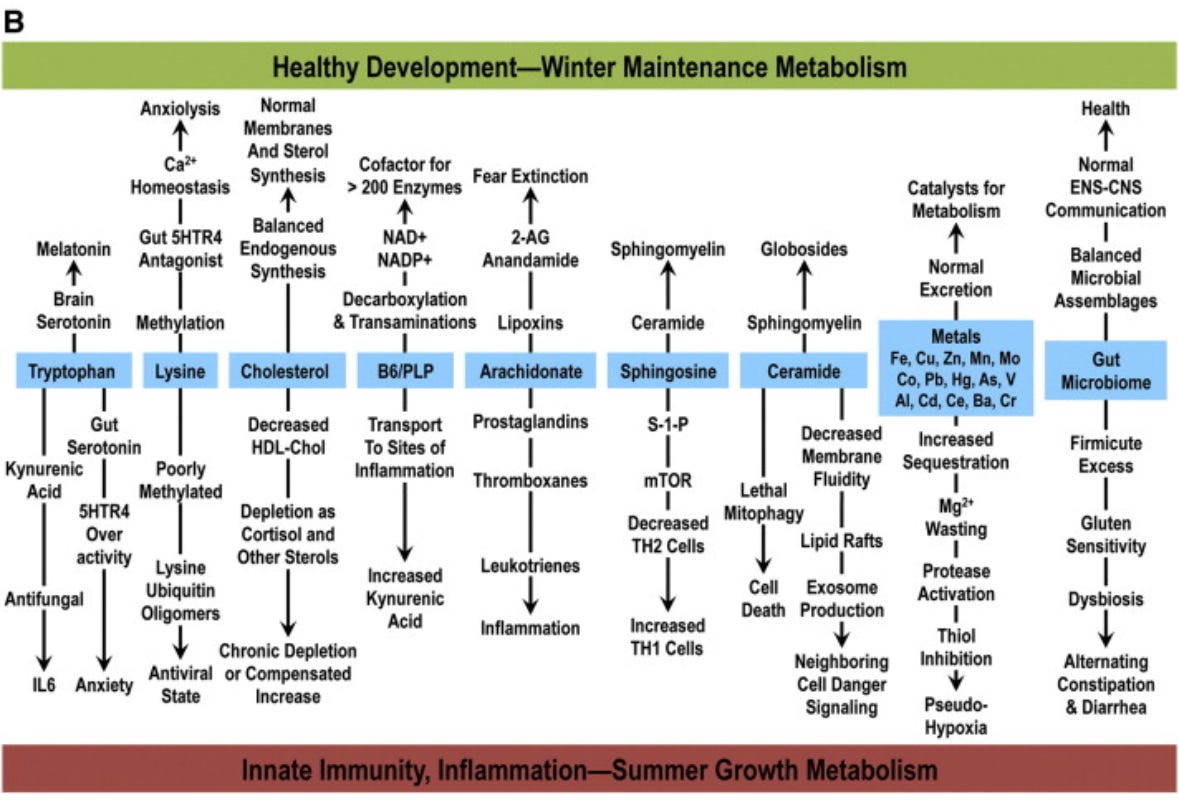
I tracked weight and AM glucose and ketone levels over the 30 days. Later on I also manipulated training & macros to assess the metabolic impacts.
Here are my results, followed by the protocol & considerations to do it right:
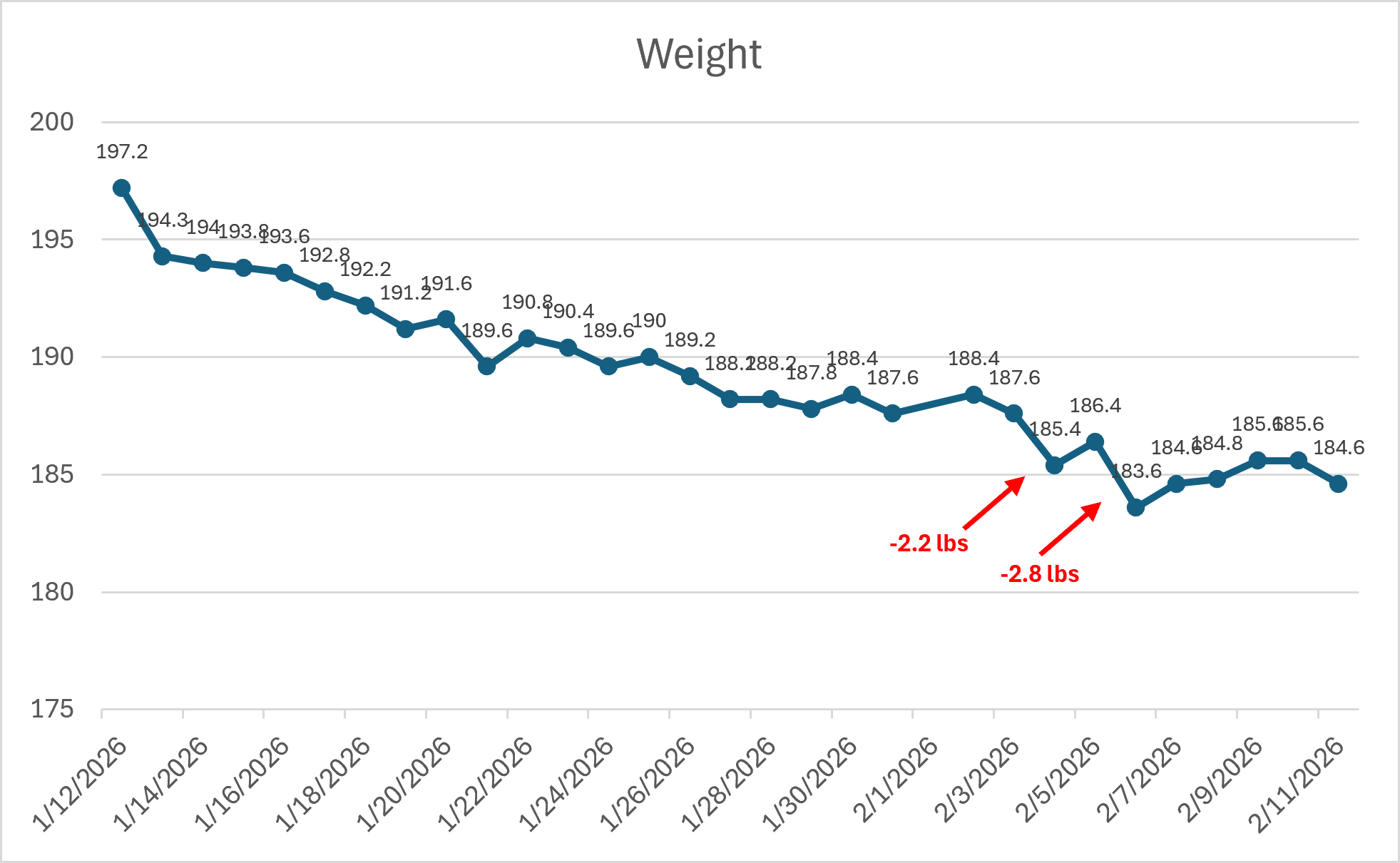
Weight
197.2 lbs —> 184.6 lbs (-12.6)
Red arrows indicate the largest drops in weight (other than day one). I intentionally kept lunch low-carb and high-fat on these days with the hypothesis that it would lead to more weight loss. It did, but it’s probably mostly water weight due to glycogen depletion.
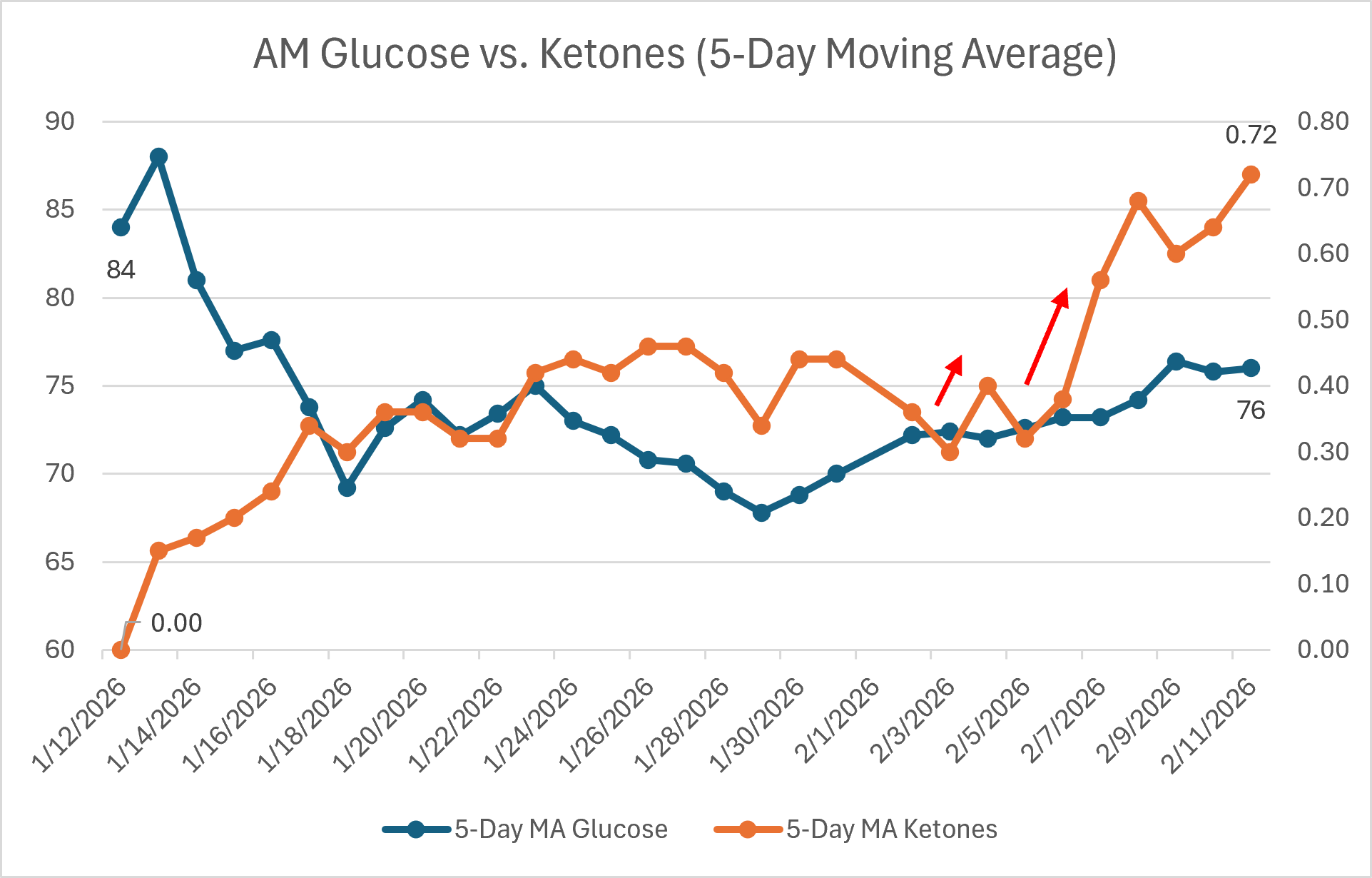
Metabolic Markers (Glucose & Ketones, Fasted AM, 5-Day MA)
Ketones reached up to 1.1 mmol/L over the 30 days, indicating a shift into moderate ketosis. Red arrows indicate the gains after high-fat lunch days.
Glucose reached as high as 87 ng/dL on day 2 (healthy range is generally below 90) and as low as 63 (slightly hypo-glycemic). Levels started to normalize at 70-80 around the midway point.
The combination of elevated ketones and balance glucose indicates metabolic flexibility is achieved (i.e. my body is using both carbs and fats as fuel sources). It was promising to see I didn’t have to go full-blown keto to start burning ketones.
Physique
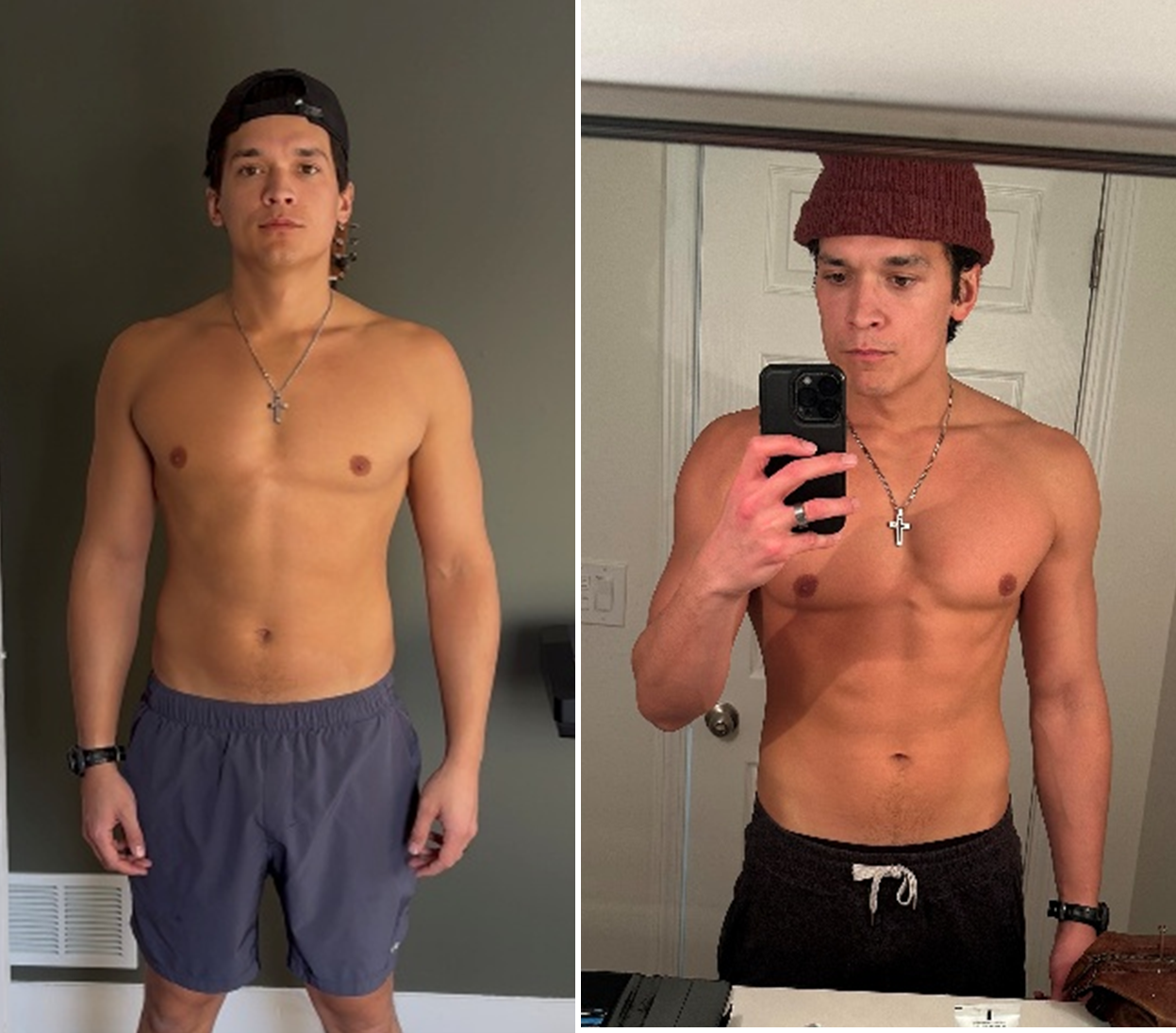
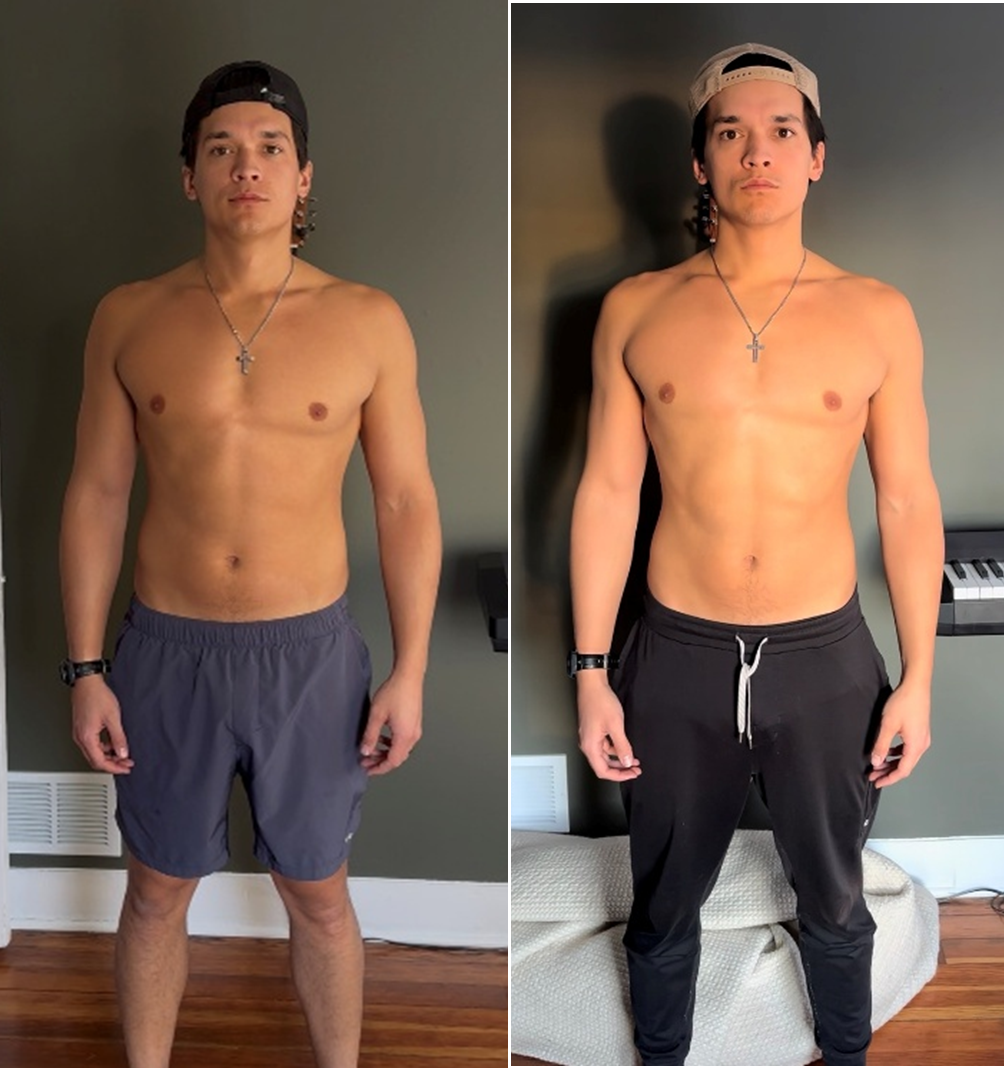
While weight loss was successful, physique took on a scrawnier look, indicating some catabolism which was expected (side-by-side below).
The third image is around two weeks post-experiment. Much more filled in lean physique after reintroducing light dinner, Zone 2 cardio, and strength training. I was happy with how recoverable muscle tone turned out to be.

The Protocol
Daily Macros
Protein: 0.7g per lb of GOAL bodyweight. This ended up being ~130g for me. I didn’t always hit this, especially towards the end, which likely contributed to things tipping slightly catabolic.
Carbs: Start with 100-150g spread evenly across breakfast and lunch. Include a mix of starches (potatoes, white rice, oats, sourdough) and berries/honey. Starches at lunch will be more satiating due to higher content of fiber and lower glycemic (blood sugar) load.
Fats: Start with 60-90g spread evenly. Coconut/MCT oil, avocado, egg yolks, fattier meats, raw nuts/seeds, fatty fish, olive oil, beef tallow...
Use this calculator as a simple starting point for total daily caloric intake. Start with the maintenance or mild weight loss number.
Eventually, make your breakfast high-carb and lunch high-fat for enhanced metabolic flexibility (discussed more below).
Sample breakdowns for me:
Break (795 cal): 65g protein, 100g carbs, 15g fat
Lunch (965 cal): 65g protein, 30g carbs, 65g fat
1,760 cal total - this is around a 500-calorie deficit at my normal activity level, hence why I’m recommending 30-60 day max on this
Weekly Adjustments
3-5 days prior: Track your typical breakfast & lunch in the Cronometer app, determine adjustments to calorie/macro intake and nutrients so you don’t run into major deficiencies.
Week 1: Reduced physical activity & training volume, just focusing on eating window and light movement such as mobility and walking.
Week 2: Increased activity — 8-10k steps post-meal, 3-4 low volume strength sessions. Never training fasted, usually 1 hour before or 2-3 hours after lunch.
Week 3 & 4: Altering macros & supplementing accordingly (optional).
Consume most of your daily carbs with breakfast while keeping fat low. This was around 100g carbs and 10g fat for me.
Conversely, consume most of your daily fat with lunch (ex: 20g carbs & 50g fat).
Supplements to support carb & fat metabolism
Breakfast: black ginger, taurine, Thiamax
Lunch: Acetyl L-carnitine and TUDCA
Other
No snacking, or as minimal as possible. Hard cutoff after finishing lunch.
Eat breakfast within 60-90 minutes of waking to align the circadian clock.
Finishing lunch between 1:00 and 2:00 pm seemed to work best for me.
Circadian health is a priority — sunlight first thing AM, as much as possible throughout the day, and block artificial light at night.
Considerations
The point of skipping dinner is to reap the benefits of fasting while signaling safety to your metabolism (see my intro post).
If you’re putting your body under excessive stress of any kind with a protocol like this, it’s defeating the chief aim of the protocol.
The major issue that I ran into is falling into deficiencies i.e. not eating enough calories or not getting enough micronutrients. This became more problematic later on as adherence & preparation started to dwindle.
The end result is excess catabolism (muscle loss), but you can get around this by ensuring you’re hitting daily protein, increasing macro targets if you’re training more, adding a quality mineral source to water (Trace, Quinton, BEAM, Shilajit…) and ensuring a diverse array of fruits and vegetables with each meal.
Other forms of metabolic stress include cheat meals, avoiding nature, moving too much or too little, sunlight deficiency (use a light device if you need to), relationships, blue light at night, career, and getting overly neurotic about doing everything perfectly…take extra care to off-load stress during this time.
Most importantly, you need to get your circadian rhythm as dialed as possible to reap the full benefit of the protocol.
An earlier eating window works because it aligns with the circadian clock. You need to get sunlight on eyes and as much skin as possible first thing AM and as much as possible during the day. Use incandescents or lizard lamps indoors during the day and block blue light at night with lighting, long sleeves, and/or glasses.
What to expect
You’ll probably notice a steep drop in weight the first 1-2 days. This will also happen if you make the shift to high-fat low-carb lunches.
Your body is shedding water, which is bound to the stored glycogen in your muscle and liver. During calorie/carb restriction, the glycogen is liberated as well as the water. Consistent fat loss will continue over the 30 days.
Sleep quality will also probably suffer at the onset. I struggled to get to sleep and had 2-3 nighttime wake-ups in the first three days before my body adjusted.
Your hunger is going to be ripping on the first one or two evenings. Fill up on non-caloric fluids, especially sparkling mineral water and herbal tea.
Lastly, I was pleasantly surprised by the improvement in GI-related symptoms. White coating on tongue, bloating, and skin irritation all decreased. By eating less often, you offer more time for regeneration of the gut lining while eliminating potential trigger foods that feed overgrowths.
When reintroducing dinner, opt for a soup with a bone broth base, loaded with vegetables and some protein. Start small and titrate up to a normal-sized dinner over 3-5 days (chicken tom kha gai was my go-to here).
Advanced Modifications
Randle Cycle: If you choose to separate macros in weeks 3 & 4 as described above, you’re taking advantage of the Randle cycle. Essentially, it states that carbs and fats compete for metabolism, and the more you can keep them separate, the more efficiently your body will produce energy and minimize fat storage and ROS. Since insulin sensitivity is highest in the AM, breakfast would be the time for higher carb intake. Higher fat at lunch allows the body to enter ketosis more easily overnight. My AM ketone levels shot up significantly when eating this way.
UVB Light Therapy: Supplementing with UVB light adds another layer of metabolic stimulus, mainly through UVB’s effect on producing alpha-MSH, which increases metabolic rate while lowering appetite. Use a lizard lamp throughout the day or a PBM device such as this one.
Cold Exposure: The body is used to experiencing food scarcity and cold temperatures at the same time (how winter was designed). Stacking cold increases metabolic rate and lowers ROS by increasing thermogenesis in fat tissue. Go for 2-5 minutes in cold water or a longer walk in the ambient cold with minimal layers. Never do it in a fasted state, and be careful not to go overboard as to not add deleterious stress to the system.
Increase Water Intake: Increasing daily water consumption seems to help with weight loss. It also acts as a vehicle for essential minerals when you add them into your water.
Supplementation: The metabolic supplements listed above can assist in glucose and fat metabolism. 5g of creatine and 1-2 servings of essential amino acids can offer additional support in staving off muscle loss. Vitamin E and choline can dampen inflammation from fat loss and support bile flow. Layer in gut support as desired — black seed oil, curcumin, NAC, aloe juice, L-Glutamine, binders…(requires additional context).
Final Thoughts
This is a fun challenge to run anytime of year, but especially during the winter when your body is expecting a period of energy scarcity.
The goal is improved metabolic health, which I certainly achieved, and weight loss is a natural consequence.
Although it’s hard, treat the 30 days as a time of regeneration. Slow things down, stay disciplined and try not to fall off towards the end as motivation fades. You’ll be proud of the results.