

If you’re not intentional about protecting and rebuilding your dopamine levels, it’s almost guaranteed that you’re already running low.
Most people equate dopamine to a “feel good” molecule or something that only matters for addiction or ADHD. In reality, dopamine orchestrates motivation, discipline, learning ability, skill development, movement patterns, and emotional tone. It’s also a hormonal and metabolic regulator in nearly every system in the body.
Optimal dopamine makes you feel like a lion. You can focus for long stretches and unplug effortlessly. You’re healthier, more present, decisive, and can think for yourself.
But the modern environment destroys dopamine signaling. Constant convenience and stimulation in the form of screens, porn, processed food, social media, recreational drugs & alcohol, and caffeine/nicotine light up the reward system far beyond what the brain was designed to handle.
On top of that, chronic stress, poor diet, nutrient deficiencies, environmental toxins, non-native EMF, and sleep disruption sabotage the physiology that produces and maintains dopamine in the first place.
You’ve probably experienced at least one of the tell-tale signs:
Anxiety, depression, and mood crashes
Weak discipline and near-zero motivation
Addictive behaviors
Sexual dysfunction
Brain fog
Anhedonia (lack of pleasure)
Poor memory and focus
Social awkwardness
A sense that your brain is constantly sputtering
Loss of coordination and balance
The implications go beyond your health. Low dopamine essentially turns you into a consumption machine. You lose your propensity to act especially on hard things, the opposite of “taking up your cross” as God instructs. Critical thinking also erodes, you feel less purposeful, and resilience against stress and temptation disappears.
You can’t reach your peak without optimal dopamine signaling. Read through the breakdown below and you’ll understand exactly why, and how you can get it back.
Dopamine in the Nervous System
“Dopamine participates in almost every centrally controlled event, from motor control to cognition” (Franco et al. 2021).
In the brain, dopamine is the currency for motivation, movement, learning, and survival. It’s meant to reinforce behaviors that help us stay alive and reproduce. In animal studies, removing dopamine led rats to starve themselves even with abundant food in their environment. That’s how essential it is for your will to live.
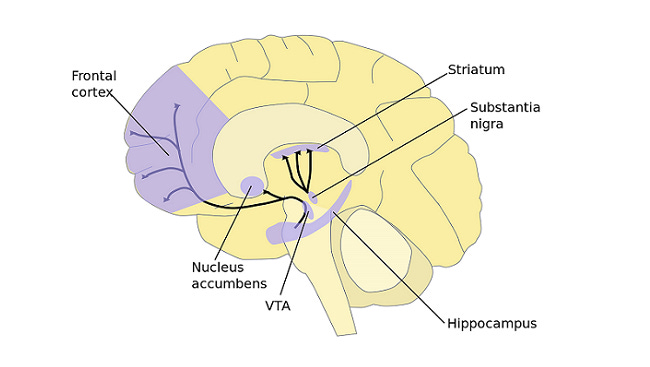
Dopamine neurons originate from the “ventral tegmental area” in the brain and project into several important regions:
Nucleus accumbens
Handles reward-seeking behavior. When dopamine signaling is strong you feel motivated and capable of exerting effort towards meaningful goals.Substantia nigra
Regulates smooth motor control and habit formation. When dopamine drops here you see slower and uncoordinated movement patterns (low dopamine in this region is the basis for Parkinson’s disease).Striata
Controls decision making, social presence, motor output, habit loops, and reward processing.Amygdala
Handles emotional tone and fear regulation. Low dopamine here makes you much less resilient to the point where meaningless stressors trigger anxiety.Hippocampus
Essential for memory formation and recall. This is one of the first regions to suffer when dopamine declines.Hypothalamus
Controls the autonomic nervous system, temperature, appetite, metabolic rate, and hormonal signaling.Prefrontal cortex
Responsible for executive function, focus, discipline, long-term planning, impulse control, and delayed gratification. When dopamine is depleted, the prefrontal cortex loses control and the less evolved limbic system takes over.
Dopamine also regulates neurotransmitters, notably the balance between glutamate and GABA. When dopamine is compromised, glutamate drives sympathetic overload as GABA falls. This is the underlying biology of burnout. You feel wired and tired, can’t focus, can’t sleep deeply, and anxiety rises. Over time, your movement quality and sexual function break down.
Dopamine in the Body
Most people don’t realize over 99% of dopamine exists outside the brain. Dopamine receptors cover the gut lining, liver, kidneys, pancreas, immune system, thyroid, adrenal glands, gonads, and heart. This makes dopamine depletion a whole-body phenomenon, not just limited to mental function and behavior.
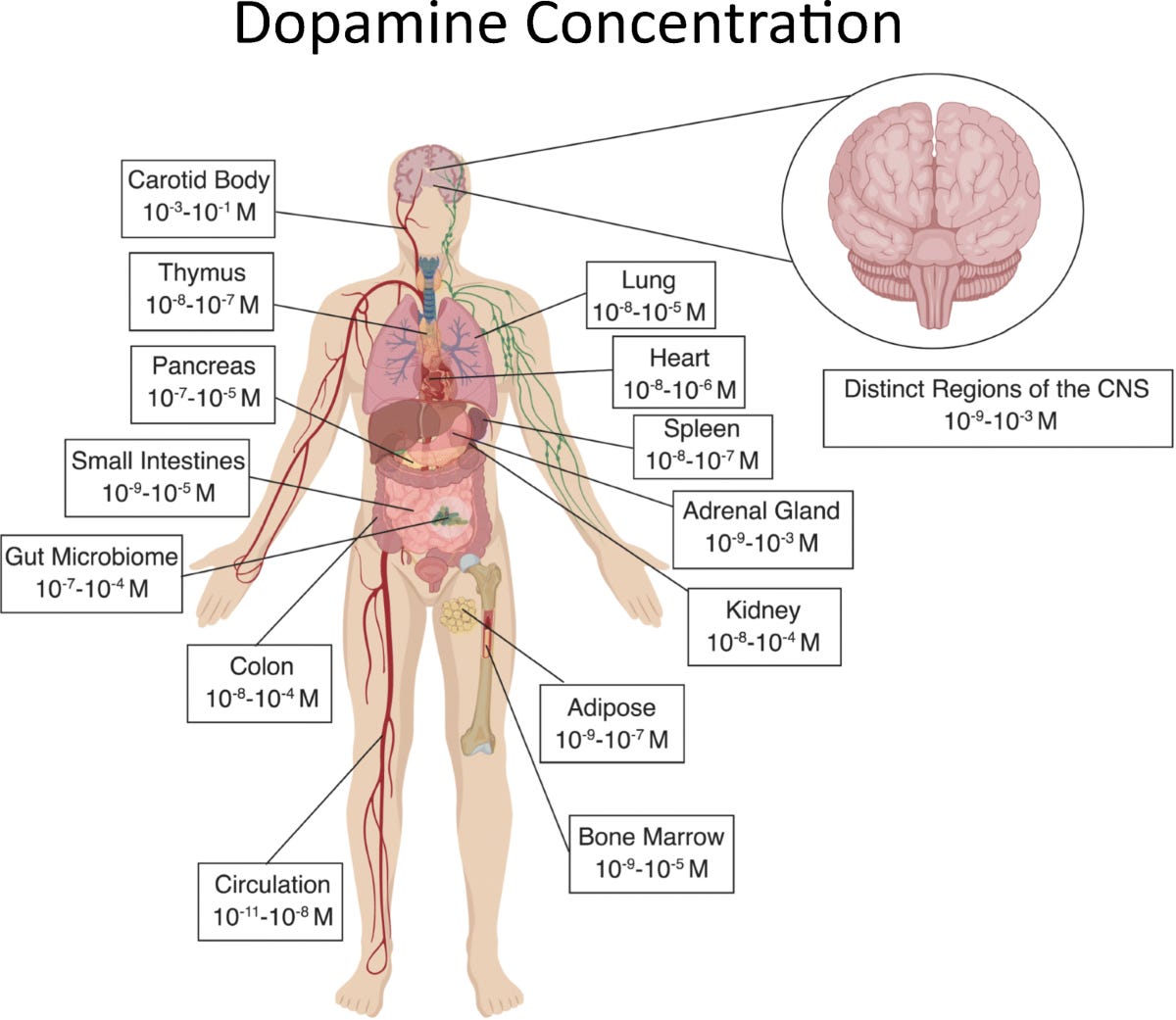
As it relates to peak physical and mental performance, dopamine influences:
Metabolic health
Dopamine regulates thermogenesis (fat burning & heat production), insulin and leptin sensitivity, glucose and fat metabolism, thyroid hormone, and energy expenditure.
Gut health
Dopamine influences gut motility, microbiome behavior, gut lining repair, and GLP-1 production.
Daytime alertness & sleep quality
Dopamine follows a diurnal rhythm. High baseline levels during the day influence alertness and drive while low nighttime levels are required for melatonin release. Phasic bursts throughout the night are also required for REM sleep architecture.
Sex hormone production
Low dopamine levels increase prolactin in the hypothalamus, which suppresses the gonadotropins (LH & FSH). This results in low testosterone/DHT for men and suboptimal estrogen/progesterone for women.
Chronic stress
Regulation of the vagus nerve and HPA axis relies on optimal dopamine signaling.
Sexual function
Sex is the most dopaminergic stimulus we were meant to experience. Dopamine sits at the center of libido, erection quality, timing of ejaculation, and orgasm.
Athletic performance & recovery
Dopamine firing influences muscle contractions, force output, motor learning, and muscle protein synthesis. It also reduces injury through movement quality and enhances immune function and bone turnover.
Hydration
Dopamine’s effects on vasopressin, aldosterone, and prolactin alter water and electrolyte gradients.
Reaction time
Quick discernment and decision making relies on rapid firing of dopamine neurons.
Dopamine depletion clearly isn’t just a mood or motivation issue. It creates a whole-body performance collapse.
How Modern Life Hijacks Your Dopamine System
Dopamine was originally designed to respond to meaningful stimuli that required effort and benefitted our survival. Sex, sunlight, real food, connection, and innovation were the biggest dopamine triggers and they were relatively rare. The pain-pleasure balance favored pain, which kept dopamine peaks moderate and sustainable.
Modern life completely bastardizes the system. The world now provides endless sources of artificial abundance in the form of:
Hyper-palatable processed foods
Porn
Social media
Blue-lit flickering screens and LEDs
Constant novelty
Recreational drugs and alcohol
Instant access to entertainment and pain-free convenience
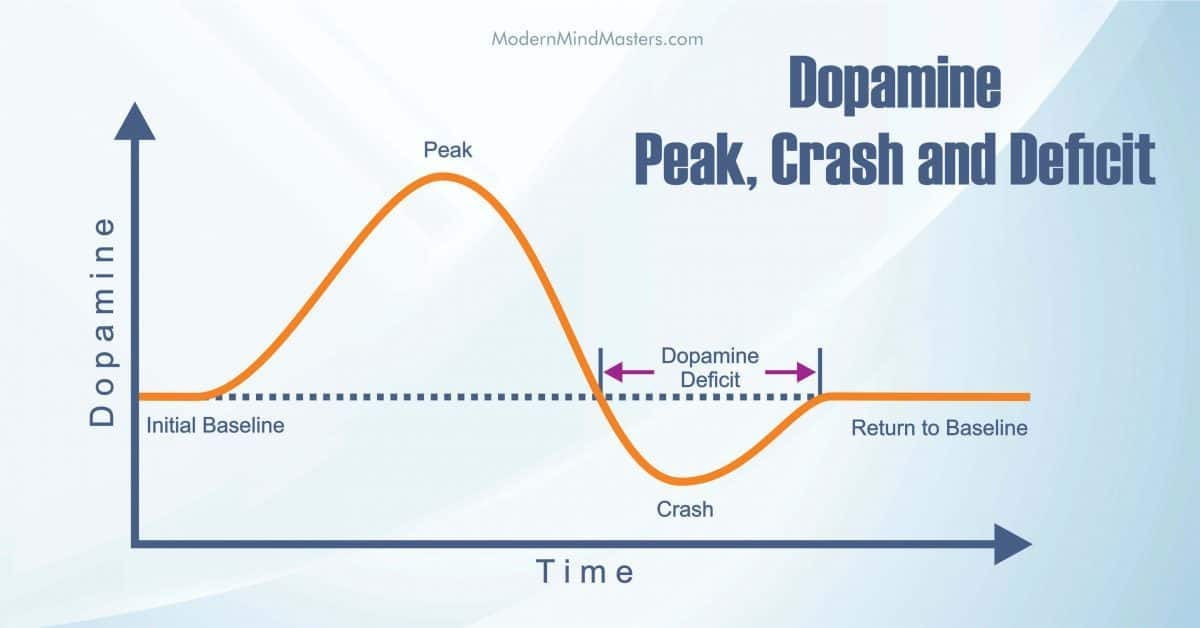
These stimuli create unnaturally high dopamine peaks followed by equally deep crashes. Only instead of a natural recovery period, we have instant access to another hit.
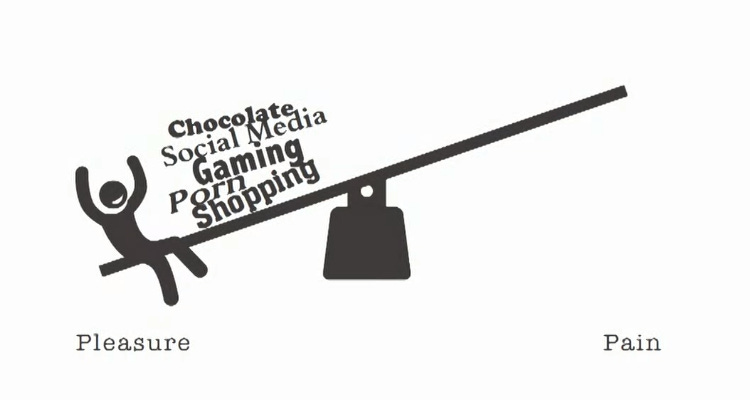
Over time this lowers baseline dopamine and reduces dopamine receptor density (“receptor involution”). You develop more pleasure-seeking and pain-avoiding tendencies, need more stimulation to feel anything, lose interest in meaningful experiences, and give up on goals faster. You become less resilient because the reward system tilts toward instant gratification.
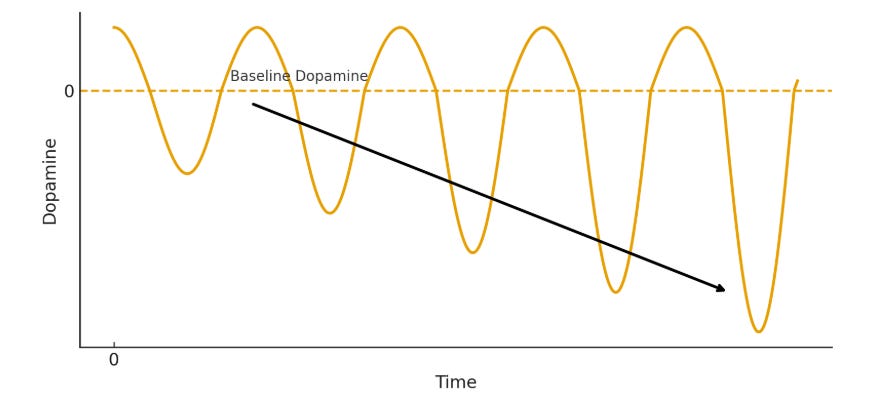
This is the mechanism behind addiction. Not just drug addiction - I’m convinced the vast majority of us have underlying addiction to technology and recreational stimulants like caffeine (which is essentially a legalized drug). Eventually, long-term dopamine breakdown forms the basis of dementia, impotence, and other chronic health issues.
On the other side of the coin is the breakdown of dopamine biochemistry. Even if you removed all dopaminergic stimulation, you still need the raw materials and physiology to synthesize dopamine in the first place. Chronic stress, nutrient deficiencies, blue light & nnEMF exposure, disrupted circadian cues, and environmental toxins reduce mitochondrial function and block the enzymes involved in dopamine production and turnover.
Hopefully, you’re starting to grasp the far-reaching implications of low dopamine, whether you’re an average joe or an elite performer. Rebuilding it takes awareness, time, and effort.
How to Restore Dopamine: The Science and Protocol
